Honestly… the first time I watched a family deal with Congestive Heart Failure, nobody in the room really understood what was happening.
The doctor explained it clearly. Medical terms. Charts. Medication lists.
Everyone nodded.
Then two weeks later the same questions came back.
Why is he so tired all the time?
Why do his legs swell again even after medication?
Why does he feel fine one day and terrible the next?
And the quiet fear underneath all of it:
Is this getting worse?
I’ve seen this pattern repeat across so many people — patients, spouses, adult children trying to help their parents.
At first everyone thinks congestive heart failure means “the heart stops.”
It doesn’t.
What’s actually happening is slower. Messier. More confusing.
And once people understand the real mechanics behind it, something interesting happens.
The panic drops.
The decisions get better.
And the day-to-day management becomes… manageable.
Not easy.
But manageable.
What Congestive Heart Failure Actually Means (In Real Life)
Doctors describe Congestive Heart Failure (CHF) as a condition where the heart cannot pump blood efficiently.
That’s technically correct.
But in real life, what people experience is something different.
From what I’ve seen across many cases, it usually shows up through a pattern like this:
• constant fatigue that doesn’t make sense
• shortness of breath from small activities
• swelling in the feet, ankles, or legs
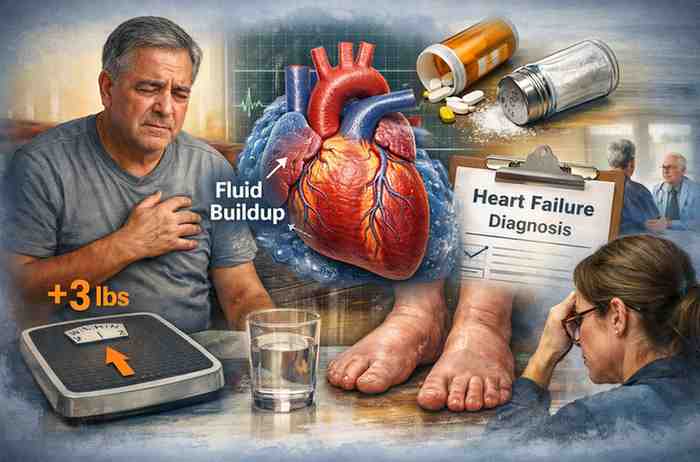
• random weight gain from fluid buildup
• feeling okay one day, terrible the next
And this part surprises almost everyone.
The heart hasn’t “failed.”
It’s still working.
Just not strongly enough to keep fluid moving through the body efficiently.
So fluid starts backing up.
That’s where the word “congestive” comes from.
Fluid congestion.
It can build up in:
• lungs
• legs
• abdomen
• liver
Which is why symptoms can feel so scattered and confusing.
One person feels like they can’t breathe.
Another notices swelling.
Another just feels exhausted all the time.
Why So Many People Miss the Early Signs
This honestly surprised me after watching so many people go through diagnosis.
Most early symptoms look like normal aging.
People shrug them off.
I’ve heard these exact lines dozens of times:
“I’m just getting older.”
“I’m out of shape.”
“Maybe I need better sleep.”
But the patterns are different.
The fatigue from congestive heart failure has a specific feel to it.
People describe it like:
• heavy body exhaustion
• sudden energy crashes
• needing to sit down after basic tasks
Walking to the mailbox suddenly feels like a workout.
Climbing stairs becomes annoying.
Then gradually…
breathing starts getting harder.
Still subtle.
Still easy to ignore.
Until one moment something becomes obvious.
Swelling.
Rapid weight gain.
Or a scary shortness of breath episode.
That’s when most people finally get checked.
What Causes Congestive Heart Failure (Most Cases Follow These Paths)
From what I’ve seen repeatedly, congestive heart failure rarely appears out of nowhere.
It usually develops after years of stress on the heart.
The most common patterns include:
1. Long-Term High Blood Pressure
This is the biggest one.
When blood pressure stays high for years, the heart has to pump harder.
Eventually the muscle thickens and weakens.
Kind of like an overworked engine.
2. Previous Heart Attacks
Heart attacks damage heart muscle.
That damaged area can’t pump effectively anymore.
So the rest of the heart struggles to compensate.
3. Coronary Artery Disease
Blocked arteries reduce oxygen supply to heart tissue.
The heart slowly weakens over time.
4. Diabetes
This one surprises people.
Diabetes affects blood vessels and heart muscle function.
Over years, it increases heart failure risk significantly.
5. Valve Problems
If heart valves don’t open or close properly, blood flow becomes inefficient.
The heart works harder.
Eventually it struggles.
The Pattern I See With Families After Diagnosis
Almost everyone goes through the same emotional stages.
It’s oddly predictable.
First reaction:
Shock
Even if symptoms were building for years.
Then comes:
Information overload
Medication names
diet restrictions
doctor visits
weight monitoring
salt limits
Families suddenly feel like they’re managing a small medical system.
Then the frustration hits.
Because progress isn’t always linear.
One good week.
Then a bad one.
Fluid builds up again.
Medication adjustments happen.
People start wondering:
Are we doing something wrong?
Usually… they’re not.
This condition just behaves that way.
What Actually Helps People Manage Congestive Heart Failure
From watching many cases over time, the people who stabilize best follow a few consistent habits.
Nothing fancy.
Just disciplined routines.
Daily Weight Tracking
This sounds small but it’s incredibly powerful.
Fluid buildup shows up as sudden weight gain.
Often before symptoms appear.
Doctors often say:
If weight increases by 2–3 pounds overnight, fluid may be building up.
Catching it early helps adjust medication quickly.
Salt Control
This is where almost everyone I’ve seen struggles at first.
Sodium pulls water into the bloodstream.
Which increases fluid retention.
People think they’re avoiding salt…
But hidden sodium is everywhere:
• packaged soups
• frozen meals
• sauces
• restaurant food
Once people start reading labels, the difference becomes obvious.
Medication Consistency
Heart failure medications often include:
• diuretics (fluid removal)
• ACE inhibitors
• beta blockers
• ARNI medications
The mistake I see most often?
Skipping doses when symptoms improve.
Symptoms improving usually means the medication is working.
Stopping it often causes symptoms to return.
Activity — But Moderated
This part confuses people.
Rest is important.
But complete inactivity makes things worse.
Light movement helps circulation.
Walking.
Stretching.
Short daily activity.
Nothing extreme.
Just consistent.
Common Mistakes Almost Everyone Makes Early
I didn’t expect this to be such a common issue until I started noticing patterns.
Ignoring Early Weight Gain
People think:
“It’s just water.”
It often is.
But that’s exactly the point.
Fluid buildup signals heart strain.
Drinking Too Much Fluid
Some patients are advised to limit fluid intake.
But people often underestimate what counts as fluid.
Coffee
tea
soup
juice
even fruit with high water content
It adds up.
Waiting Too Long To Call the Doctor
Symptoms often creep up slowly.
People try to “wait it out.”
But early adjustments usually prevent hospital visits.
Overdoing “Healthy Lifestyle Changes”
This one sounds strange.
But it happens.
People suddenly attempt:
• intense exercise
• extreme diets
• aggressive fasting
The heart doesn’t always tolerate sudden changes well.
Gradual adjustments work better.
How Long Does It Take to See Improvement?
This question comes up constantly.
And the honest answer is:
It depends on the cause and severity.
But from what I’ve observed in many people:
• medication effects start within days to weeks
• breathing often improves within 2–6 weeks
• fatigue improves more slowly
• long-term stabilization can take months
The hardest part emotionally is the inconsistency.
Some weeks feel normal.
Then symptoms return briefly.
That doesn’t always mean things are worsening.
Sometimes it just means adjustments are needed.
FAQ: Questions People Always Ask About Congestive Heart Failure
Is congestive heart failure reversible?
In some cases, heart function can improve significantly with treatment.
Especially when caused by:
• uncontrolled blood pressure
• certain infections
• heart rhythm problems
But many cases require long-term management.
What is the life expectancy?
It varies widely.
Some people live many stable years with proper treatment and lifestyle management.
Severity, underlying causes, and treatment response all matter.
Can people still live normal lives?
Many do.
With medication, diet control, and monitoring, people often return to daily routines.
But pacing becomes important.
Energy management matters.
Is exercise safe?
Usually yes — light to moderate activity.
Doctors often recommend cardiac rehabilitation programs.
Those help patients build safe routines.
Objections I Hear From Patients (And What Usually Happens)
“Medication makes me feel worse.”
Sometimes medications cause fatigue initially.
But doses can often be adjusted.
Stopping them entirely usually makes symptoms worse long-term.
“I feel fine now, so maybe I don’t need treatment.”
This is risky.
Symptoms improving usually means the treatment is working.
Stopping it often reverses progress.
“Diet changes are too restrictive.”
This one’s real.
Salt reduction is frustrating.
But many people adjust over time once they notice swelling decreasing.
Taste buds adapt.
A Reality Check Most Doctors Don’t Always Explain Clearly
Congestive heart failure isn’t a quick fix condition.
It’s management.
Long-term management.
That doesn’t mean life stops.
But expectations need adjusting.
Some weeks will feel normal.
Others won’t.
Medication adjustments are common.
Energy levels fluctuate.
The people who cope best usually accept that rhythm early.
Instead of fighting it.
Practical Takeaways I’ve Seen Work Consistently
If someone close to you is dealing with congestive heart failure, these habits make the biggest difference.
1. Track daily weight
Same time each morning.
Same scale.
Write it down.
2. Learn hidden sodium sources
Packaged foods are often the biggest problem.
Cooking more at home helps.
3. Respect fatigue
Rest when needed.
But avoid total inactivity.
4. Take medication consistently
Even when symptoms improve.
5. Communicate early with doctors
Small symptom changes matter.
Early adjustments prevent bigger problems.
6. Stay patient with progress
Improvement often comes slowly.
Weeks. Months.
Not overnight.
And honestly… the biggest shift I see happen is psychological.
At first people feel like they’re fighting something unpredictable.
But over time patterns start making sense.
Weight changes signal fluid.
Fatigue signals strain.
Medication stabilizes things.
Routine brings control.
So no — congestive heart failure isn’t simple.
But it also isn’t the immediate catastrophe people often imagine when they first hear the diagnosis.
I’ve watched enough families move from panic to confidence once they understand what’s really happening.
Sometimes that shift alone makes the biggest difference.