Honestly, I didn’t think this would work.
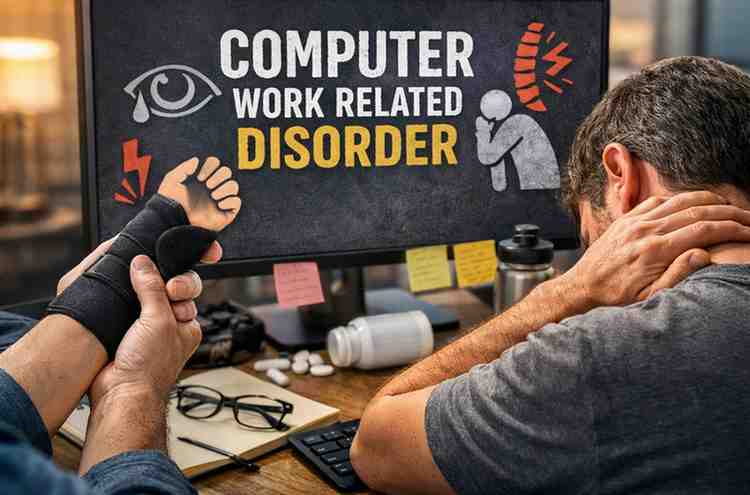
I’d already tried three “fixes,” bought two gadgets I don’t use anymore, and told myself the pain was just part of the job. Then my wrists started buzzing at night. My neck locked up when I turned my head. My eyes burned like I’d rubbed chili into them. Somewhere in that mess, I finally admitted what was going on: Computer Work Related Disorder wasn’t some abstract workplace term. It was my everyday reality.
Not gonna lie… I felt dumb for letting it get this far.
I’m the person who googles chair specs. I’m also the person who worked through lunch, hunched over a laptop on the couch, telling myself I’d “fix my setup later.” Later showed up as tingling fingers, headaches, and this low-grade panic that I was breaking my body for a paycheck.
This is the stuff I wish someone had told me earlier. The messy version. The stuff that actually changed things. And the parts that didn’t.
What I Thought Computer Work Related Disorder Meant (and Why That Slowed Me Down)
I used to think this was just about wrists.
Like, “Oh, that’s carpal tunnel, get a brace, you’re fine.”
Wrong. So wrong.
From what I’ve seen (and felt), Computer Work Related Disorder is more like a bundle of problems that pile up quietly:
-
Wrists and forearms that ache or tingle
-
Neck and shoulder pain that creeps into headaches
-
Low back tightness that turns into “why can’t I stand up straight?”
-
Dry, burning eyes
-
Brain fog from staring at screens too long
Here’s the part I messed up at first:
I treated each symptom like a separate problem. Wrist brace for wrists. Eye drops for eyes. A heating pad for my neck. I never addressed the pattern: long hours + bad posture + zero breaks + stress.
That piecemeal approach slowed everything down.
It felt productive. It wasn’t.
The First Things I Tried (and Why They Didn’t Fix It)
I’m embarrassed by how much money I spent before I changed my habits.
What I tried first:
-
A cheap wrist brace
-
Blue light glasses
-
A random “ergonomic” mouse I didn’t research
-
Stretching… once in a while
-
Pushing through pain because deadlines
Why it failed (for me):
-
The brace let me keep bad posture. It didn’t change how I worked.
-
The glasses helped eye strain a little, but I was still staring for hours.
-
The mouse was fine, but my desk height was wrong, so my shoulder paid the price.
-
Stretching “sometimes” is basically the same as not stretching.
-
Pushing through pain taught my body to stay tense.
This honestly surprised me:
Gadgets didn’t fix a system problem. They just made the system slightly more tolerable. And tolerable is how you end up stuck.
The One Shift That Actually Moved the Needle
I stopped trying to “fix symptoms” and started fixing my workday.
Not perfectly. Not all at once. Just enough to feel different.
The boring changes that helped more than any gadget:
-
Desk and chair height first.
Elbows roughly level with the desk. Feet flat. Monitor at eye level.
I felt silly measuring this. Then my shoulders relaxed for the first time in months. -
Timer for breaks.
25 minutes work. 3–5 minutes stand up.
At first I ignored the timer. Then I noticed my neck hurt less on days I listened. -
Micro-movements, not hero stretches.
Small shoulder rolls. Wrist circles. Standing up to refill water.
Big stretches once a day didn’t undo eight hours of freezing in one position. -
Lighting adjustment.
Less glare. A warmer desk lamp at night.
My eyes stopped burning. That alone improved my mood. -
Lowering my daily “grind” expectation.
This one hurt my ego. But working 9 hyper-focused hours wrecked me.
Working 6–7 with real → breaks was… actually better work.
From what I’ve seen, at least:
You don’t need perfection. You need fewer long, frozen hours in one position.
How Long Did It Take to Feel Better?
This is where I wish I could give you a clean timeline.
I can’t.
What actually happened:
-
Week 1: Neck pain eased a bit. Wrists still mad.
-
Week 3: Fewer headaches. Sleep improved.
-
Week 6: Tingling in my fingers showed up less often.
-
3 months: I stopped thinking about my body all the time.
-
6 months: Bad days still happened, but they didn’t spiral.
This honestly surprised me too:
Progress wasn’t linear. Some weeks felt worse. Stress made symptoms flare. Bad sleep made everything louder.
So yeah… if you’re asking “how long until this works?”
The real answer is: long enough to build habits, not long enough to feel magical.
The Stuff That Worked Better Than I Expected
I didn’t expect these to matter as much as they did:
-
Hydration.
Dehydration made muscle tightness worse. I rolled my eyes at this advice. Then I noticed the pattern. -
Walking calls.
Even 10 minutes pacing while listening to meetings loosened my back. -
Lowering mouse sensitivity.
Fewer micro-twitches in my wrist. Tiny change. Big relief. -
Stress awareness.
On anxious days, I clenched my shoulders without noticing.
Relaxing my jaw actually helped my neck. Weird, but real. -
One “non-screen” hobby.
Reading paper books. Cooking. Anything that didn’t involve hunching.
It reminded my body what neutral posture feels like.
Common Mistakes (Please Don’t Repeat Mine)
If you’re dealing with Computer Work Related Disorder, these will slow you down:
-
Waiting for pain to be “bad enough.”
By the time I acted, patterns were already baked in. -
Buying gear before fixing posture.
Tools can help. They don’t replace alignment. -
Doing everything at once.
I burned out trying to overhaul my routine in a week.
One change at a time sticks better. -
Only changing on good days.
The bad days are when habits matter most. -
Ignoring sleep.
Bad sleep = tighter muscles = more pain. This loop is brutal.
Quick FAQ (People Always Ask This Stuff)
Is Computer Work Related Disorder the same as carpal tunnel?
No. Carpal tunnel can be part of it, but this is broader. Neck, shoulders, eyes, back… the whole chain.
Is it worth changing my setup if I’m not in pain yet?
Honestly? Yes. Prevention is way easier than undoing months of tension.
Do ergonomic chairs fix this?
They help if your desk and habits match. A great chair + bad posture still equals pain.
Can this go away on its own?
In mild cases, sometimes. In my case, it didn’t until I changed how I worked.
Do I need a doctor?
If you have numbness, shooting pain, or weakness, yeah—get checked. Don’t tough-guy that stuff.
Objections I Had (and What Changed My Mind)
“I don’t have time for breaks.”
I thought this too. Then I lost time to pain and distraction. Breaks gave me time back.
“My job won’t let me change my setup.”
Sometimes true. But small things—monitor height, keyboard angle, posture—are often negotiable or adjustable.
“This feels like overkill.”
It felt that way to me. Until my hands went numb at night. Then nothing felt optional.
“I’ll just push through this busy season.”
I said this for two years. There’s always another busy season.
Reality Check (Because This Isn’t Magic)
Let’s be real for a second.
-
This won’t fix everything overnight.
-
Some days will still hurt.
-
Stress can undo a week of good habits in one afternoon.
-
You might need professional help if symptoms are severe.
-
If you hate routines, this approach will annoy you.
Who this is not for:
-
People looking for a single gadget fix
-
Anyone who wants instant results
-
Folks unwilling to change how they work day-to-day
And yeah… there were moments I thought, “This is too slow. Why am I even trying?”
Those were usually the days I skipped breaks.
What I’d Do Differently If I Started Over
If I could rewind:
-
I’d fix desk height before buying anything.
-
I’d set break timers on day one.
-
I’d take symptoms seriously sooner.
-
I’d stop treating pain as “normal for tech work.”
-
I’d ask for small accommodations earlier instead of toughing it out.
That last one still stings a little. Pride is expensive.
Practical Takeaways (No Fluff, Just the Real Stuff)
What to do:
-
Adjust your desk and screen before buying gadgets
-
Use timers for breaks
-
Build tiny movement into your day
-
Hydrate more than you think you need
-
Notice stress posture (jaw, shoulders, breath)
What to avoid:
-
Ignoring early symptoms
-
One-time stretches instead of daily micro-movements
-
Expecting tools to fix habits
-
Powering through pain
-
Overhauling everything at once
What to expect emotionally:
-
Frustration when progress is slow
-
Relief when pain dips
-
Doubt on bad days
-
Small wins that don’t feel dramatic but add up
What patience looks like:
-
Weeks, not days
-
Tracking patterns, not chasing instant relief
-
Letting “better” count, even if “perfect” feels far away
No guarantees here. No miracle claims. Just patterns that helped me stop feeling trapped in my own body.
So yeah—Computer Work Related Disorder didn’t vanish for me.
But it stopped running my day.
Some mornings I still wake up stiff. Some weeks I forget breaks and pay for it. Then again… now I notice faster. I correct sooner. I don’t spiral.
And that shift—from helpless to aware—felt like relief.
Quiet relief.
The kind that doesn’t look impressive on Instagram, but makes the workday feel survivable again ????