Honestly… the conversations around chronic cannabis use rarely start with curiosity.
They usually start with frustration.
Not dramatic stories. Just quiet ones.
A guy who used cannabis every night for sleep suddenly realizing it stopped working.
A woman who originally used it for anxiety… but now can’t tell if the anxiety is better or worse.
Someone trying to quit and discovering their appetite, mood, and patience all went sideways for a few weeks.
I’ve watched this pattern play out across dozens of people — friends, readers, online communities, and people who reached out privately asking, “Is this normal?”
And what struck me most wasn’t the extremes.
It was how predictable the middle looked.
People trying to manage pain. Sleep. Stress. Trauma. Burnout. Sometimes boredom.
Some thrive with it.
Some quietly struggle.
And almost everyone misunderstands something about long-term cannabis use at the beginning.
Not because they’re careless.
Because the early experience… feels simple.
Later stages? Much less simple.
Let me walk through the patterns I keep seeing.
Why People Drift Into Chronic Cannabis Use
Most people don’t plan to become long-term users.
From what I’ve seen, it usually starts with a very reasonable problem.
Something like:
-
chronic pain
-
insomnia
-
stress after work
-
anxiety that makes evenings unbearable
-
appetite problems
-
PTSD symptoms
-
replacing alcohol
And the early results can feel almost… too good.
Sleep improves.
Muscles relax.
Thoughts slow down.
Food tastes better.
For a while, it feels like a cleaner coping tool than alcohol or pills.
I’ve seen people describe the first few months like this: “Why didn’t I do this earlier?”
That honeymoon phase is real.
But it doesn’t last forever for most people.
And that’s where chronic use begins to change the experience.
What Chronic Cannabis Use Actually Means
People imagine “chronic use” as heavy stoner behavior.
But clinically, it usually means something simpler:
Using cannabis regularly over a long period of time.
Often:
-
daily use
-
near-daily use
-
multiple times per day
-
or consistent use for months/years
What matters more than frequency, though, is dependency patterns.
Signs people quietly notice:
-
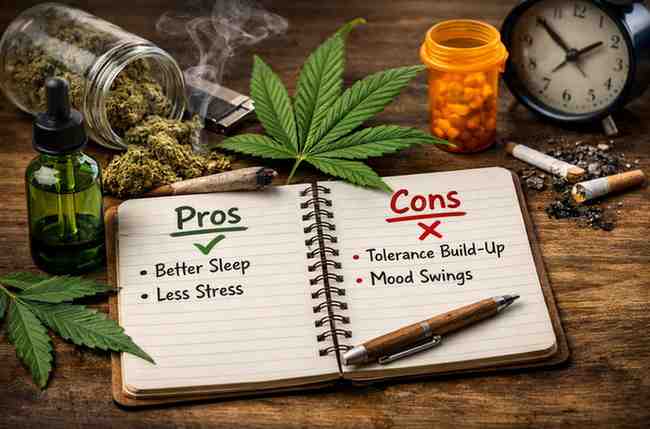
needing more to feel the same effect
-
irritability when skipping it
-
sleep disruption without it
-
appetite changes
-
mood swings during breaks
These patterns don’t mean someone is “addicted” automatically.
But they do signal body adaptation.
And the body adapts faster than most people expect.
The First Thing That Surprises Most Long-Term Users
Tolerance.
Almost everyone underestimates it.
The early weeks feel stable.
Then slowly…
People start increasing dose.
Not dramatically. Just a little.
More THC.
Stronger products.
Extra session before bed.
Then eventually someone says something like: “It doesn’t hit like it used to.”
From what I’ve seen, this usually appears somewhere between:
3 months and 18 months of regular use.
Huge range.
Depends on:
-
potency
-
body chemistry
-
frequency
-
THC vs CBD balance
But tolerance creep is almost universal.
And people rarely notice it happening in real time.
A Pattern I Didn’t Expect to See So Often
This one honestly surprised me.
Many people using cannabis for anxiety slowly develop a strange loop.
Early stage:
Cannabis reduces anxiety.
Later stage:
Cannabis sometimes increases anxiety.
Especially with:
-
high THC strains
-
edibles
-
stronger concentrates
What I’ve heard repeatedly: “It used to calm me down. Now sometimes it makes my brain race.”
Not everyone experiences this.
But it happens enough that it’s worth paying attention to.
And when it happens, the solution is rarely what people expect.
It’s usually one of these:
-
reducing THC potency
-
switching to CBD-heavy strains
-
taking tolerance breaks
-
reducing frequency
The instinct to use more to fix the anxiety usually backfires.
I’ve seen that loop several times.
The Sleep Situation (People Ask This Constantly)
Cannabis and sleep is complicated.
Short-term:
Many people fall asleep faster.
Deep relaxation.
Muscle release.
Mind slows down.
But with chronic cannabis use, some people eventually notice:
-
lighter sleep
-
vivid dreams during breaks
-
waking up more often
-
needing cannabis to fall asleep at all
The dream rebound during breaks surprises people the most.
When someone stops after long-term use, they sometimes report: “My dreams came back like a movie theater.”
That’s related to REM sleep suppression.
The body basically catches up.
Not dangerous.
Just unexpected.
The Appetite Pattern Nobody Talks About
Everyone knows about “the munchies.”
But long-term use creates two distinct patterns I’ve seen repeatedly.
Pattern A: Appetite Boost
Some people rely on cannabis to eat regularly.
This happens especially with:
-
chemotherapy patients
-
chronic illness
-
severe stress
-
people recovering from eating disorders
For them, cannabis genuinely helps maintain nutrition.
Pattern B: Appetite Dependence
Other users slowly realize they can’t feel hungry without it.
During breaks:
-
food seems unappealing
-
appetite disappears
-
mild nausea appears
This usually stabilizes after a couple weeks.
But it catches people off guard.
The Most Common Mistake I’ve Seen
People treat cannabis like a neutral habit.
Something that doesn’t require management.
But the people who seem to do best with chronic cannabis use almost always do one thing differently.
They take intentional breaks.
Often called tolerance breaks.
Typical pattern I’ve seen among experienced users:
-
2–4 week breaks once or twice a year
-
occasional “off days” during the week
-
switching strains periodically
This resets tolerance and helps avoid dependency loops.
Without breaks, cannabis tends to drift from tool → routine → default.
And that shift changes the experience.
What Usually Works Better Than People Expect
From what I’ve observed, a few strategies consistently help long-term users maintain balance.
1. Lower THC Than You Think
Most beginners assume stronger = better.
Actually the opposite.
Moderate THC often produces more stable results.
Especially for anxiety and sleep.
2. CBD Balances Effects
CBD can soften THC intensity.
People often report:
-
less paranoia
-
smoother relaxation
-
clearer thinking
Balanced ratios work surprisingly well.
3. Timing Matters
Using cannabis earlier in the evening often improves sleep stability.
Using it right before bed can disrupt later sleep cycles for some people.
4. Microdosing Works for Many
Small doses.
Minimal intoxication.
Just enough to shift mood or pain.
I’ve seen people switch from heavy use to microdosing and say: “This is what I wish I started with.”
When Chronic Cannabis Use Backfires
This part gets ignored in a lot of advice online.
But I’ve seen some situations where long-term cannabis use clearly doesn’t help.
Sometimes it worsens things.
Especially with:
-
untreated severe anxiety
-
panic disorder
-
certain mood disorders
-
heavy high-THC daily use
Some people also develop Cannabis Hyperemesis Syndrome (CHS).
It’s rare but real.
Symptoms include:
-
intense nausea
-
vomiting
-
relief from hot showers
When this appears, stopping cannabis usually resolves it.
But it can take time to recognize.
Reality Check: What Chronic Cannabis Use Actually Feels Like Long Term
Not glamorous.
Not catastrophic either.
Just… normal life with a tool in the background.
People who manage it well usually describe something like:
-
occasional relaxation
-
better pain control
-
manageable sleep
But also:
-
tolerance management
-
mindful dosing
-
occasional breaks
The people who struggle most usually drift into automatic use.
No intention.
Just habit.
That’s where problems tend to appear.
Common Questions People Ask
How long does cannabis tolerance take to reset?
From what I’ve seen, most people notice improvement after 2–4 weeks without THC.
Some changes appear within a week.
But full reset often takes longer.
Is chronic cannabis use dangerous?
For most adults, moderate use isn’t considered highly dangerous.
But long-term heavy use can impact:
-
memory
-
motivation
-
mental health in vulnerable individuals
It’s not harmless.
But it’s also not the catastrophe some messaging suggests.
Context matters.
Can someone function normally with chronic cannabis use?
Yes.
Many people maintain jobs, relationships, and routines.
But the difference usually comes down to intentional vs automatic use.
Objections I Hear All the Time
“But cannabis is natural.”
So are many substances that affect brain chemistry.
Natural doesn’t mean neutral.
Still, it doesn’t automatically mean harmful either.
Dose and frequency matter far more.
“Alcohol is worse.”
Often true.
But that comparison can distract from evaluating cannabis honestly.
Two different substances.
Different risks.
“I’ve used it for years and feel fine.”
That can absolutely be true.
The patterns I’ve seen vary widely.
Some people genuinely integrate cannabis without major issues.
Others quietly struggle with tolerance or mood loops.
Practical Takeaways From What I’ve Seen
If someone asked me for honest guidance after watching all these patterns…
I’d probably say this.
Start Lower Than You Think
High-THC products create more long-term issues than moderate ones.
People rarely regret starting lower.
Take Breaks Early
Waiting until tolerance builds makes breaks harder.
Short resets help.
Watch the Anxiety Feedback Loop
If cannabis starts increasing anxiety…
That’s not uncommon.
Reducing potency often helps more than quitting immediately.
Avoid Automatic Use
Intent matters.
Using cannabis intentionally for a purpose feels different from habit-driven use.
Expect Adjustment Periods
Sleep, appetite, and mood can fluctuate during breaks.
Most stabilize within a few weeks.
Still.
That period can feel uncomfortable.
Who Should Probably Avoid Chronic Cannabis Use
From what I’ve seen, this approach tends to work poorly for people with:
-
severe untreated anxiety disorders
-
history of psychosis
-
heavy dependency patterns with substances
-
unstable sleep cycles
It’s not universal.
But caution matters.
And medical guidance helps in complex cases.
One Quiet Truth About Chronic Cannabis Use
Most people figure out their relationship with cannabis through experience, not theory.
Through trial.
Through noticing subtle changes.
Through asking uncomfortable questions.
Sometimes through taking breaks and realizing things feel different.
I’ve watched people adjust their approach over years.
Some reduce their use.
Some keep it occasional.
Some quit completely.
And some settle into a balanced routine that works for them.
There’s no universal script.
But the people who seem most comfortable with it long-term usually share one trait.
They stay curious about how it’s affecting them.
Not defensive.
Not dismissive.
Just paying attention.
And honestly… that small habit of awareness seems to solve more problems than any strain, dose, or strategy ever could.