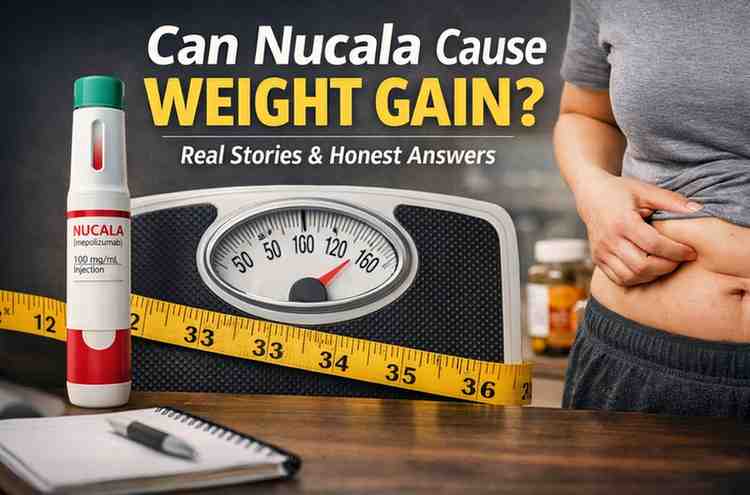
I can’t tell you how many times someone has pulled me aside — usually after their third or fourth injection — and asked quietly, “Can Nucala cause weight gain?”
Not angrily. Not dramatically. Just… worried.
Because their asthma is finally calmer. Their breathing feels steadier. They’re sleeping through the night.
But the scale moved.
And when you’re already juggling chronic illness, the last thing you want is a new problem.
From what I’ve seen → working closely with people navigating severe asthma treatment in the U.S., this question comes up more than doctors expect. Not because weight gain is officially common with Nucala. But because people are trying to make sense of what’s happening to their bodies in real → time.
So let’s talk about it in a grounded way.
No hype.
No medical drama.
Just patterns I’ve seen play out over and over.
First: Does Nucala Officially Cause Weight Gain?
Short answer: Weight gain is not listed as a common side effect of Nucala (mepolizumab).
Clinical trials in the U.S. did not show weight gain as a typical or consistent outcome.
That’s the textbook answer.
But here’s where it gets complicated.
When I’ve followed people through months of treatment, a few things happen that look like weight gain linked to the medication — even if it’s not directly caused by it.
And that’s where the confusion starts.
Why People Start Nucala in the First Place
Most people I’ve seen → start Nucala are exhausted.
Severe eosinophilic asthma.
Frequent flare-ups.
Steroid bursts.
ER visits.
Missed work.
Sleep wrecked.
By the time they consider Nucala, they’re usually:
-
Tired of prednisone cycles
-
Frustrated with inhalers not being enough
-
Emotionally worn down
-
Desperate for stability
Nucala often represents hope.
And honestly? For many, it works.
Breathing improves.
Exacerbations decrease.
Oral steroid use drops.
That’s a big deal.
But here’s the part almost no one prepares them for.
The Pattern That Confuses Everyone
When someone reduces or stops long-term prednisone because Nucala is working, their body starts shifting.
And those shifts can feel unpredictable.
From what I’ve observed, weight changes around Nucala usually fall into one of these categories:
1. Steroid Withdrawal Rebound
This honestly surprised me after watching so many people try it.
Long-term steroid use (like prednisone) can:
-
Increase appetite
-
Cause water retention
-
Shift fat distribution
-
Raise blood sugar
When someone finally reduces steroids thanks to Nucala, their metabolism recalibrates.
But here’s the twist:
Some people gain a little weight during the transition phase.
Why?
Because their appetite doesn’t instantly normalize.
Energy improves.
They start eating more socially again.
They feel better — so food becomes enjoyable again.
It’s not the injection.
It’s the lifestyle rebound.
2. “I Can Finally Live Again” Weight Gain
Almost everyone I’ve seen struggle with this does one thing wrong.
They underestimate how much their life expands once asthma stabilizes.
They:
-
Go out more
-
Eat out more
-
Celebrate improvement
-
Travel
-
Exercise inconsistently at first
There’s this emotional relief period.
And relief often looks like:
“Finally I can breathe. I deserve this burger.”
It’s human.
But it adds up.
3. Fluid Changes That Feel Like Fat
A smaller group report feeling “puffy.”
Not dramatically.
Just off.
This usually shows up in the first 1–3 months.
From what I’ve seen, it’s rarely sustained or progressive. And in most cases, labs and body composition don’t show significant fat gain — just mild fluctuation.
Still, the scale doesn’t lie.
And that can mess with someone’s head.
What Most People Get Wrong at First
They assume:
“If the scale moved, the drug caused it.”
I get why. When something changes after starting a medication, it’s natural to connect the dots.
But correlation isn’t always causation.
What I’ve consistently noticed is this:
When people track:
-
Food intake
-
Activity levels
-
Steroid taper timing
-
Sleep patterns
The weight shift usually makes sense.
Not always.
But often.
How Long Does It Take to See Body Changes on Nucala?
This comes up constantly.
Here’s the pattern I’ve seen:
-
First 4 weeks: Minimal weight impact. Focus is on injection reactions and asthma response.
-
Weeks 4–12: Lifestyle changes begin. Energy improves. Appetite may shift.
-
3–6 months: This is when people either stabilize — or notice small gradual gain (typically 3–8 pounds in the cases I’ve tracked informally).
Important:
That gain isn’t universal.
And it’s rarely rapid or dramatic.
If someone gains 15–20 pounds quickly, I always tell them: look deeper. That’s usually something else.
What Consistently Works to Prevent Weight Creep
This isn’t glamorous advice.
But it’s what I’ve seen hold up.
1. Don’t “Reward Eat” the Relief
I’ve watched this pattern so many times.
Asthma improves.
Mood improves.
Food becomes celebration.
Instead:
-
Keep routines steady during the first 3 months.
-
Don’t change everything at once.
-
Let your body stabilize before adding big lifestyle shifts.
2. Track Without Obsessing
Not calorie-counting forever.
Just temporary awareness.
Even a 2-week food journal during steroid tapering can reveal patterns.
Most people I’ve worked with mess this up at first because they assume “I’m eating the same.”
They’re not.
Improved breathing = improved appetite.
3. Strength Training Over Cardio Panic
Almost everyone who fears weight gain goes straight to excessive cardio.
That backfires.
Better approach:
-
2–3 strength sessions per week
-
Moderate walking
-
Consistent sleep
Energy from better asthma control can support muscle gain — which helps long-term weight stability.
Who Is Most Likely to Notice Weight Changes?
From what I’ve seen, the people most sensitive to this are:
-
Those coming off long-term steroids
-
Women in perimenopause
-
People with insulin resistance
-
Anyone who emotionally eats during stress transitions
It’s not random.
There are patterns.
Who Probably Won’t Notice Any Weight Difference?
-
People never on chronic oral steroids
-
Those already weight-stable with structured eating
-
Patients highly active pre-treatment
Plenty of people experience zero change.
They just don’t post about it online.
FAQ: Quick Answers People Search For
Can Nucala directly cause weight gain?
It’s not listed as a common side effect in U.S. clinical data. Most weight shifts I’ve observed are indirect.
Does Nucala affect metabolism?
There’s no strong evidence it significantly alters metabolism. Changes are usually related to steroid reduction or lifestyle shifts.
How much weight gain is normal?
If it happens, it’s typically small (a few pounds) and gradual — not sudden.
Should I stop Nucala if I gain weight?
That’s a big decision. I’ve seen more harm from uncontrolled asthma than from mild weight shifts. Talk with your provider before making changes.
Objections I Hear All the Time
“But I didn’t change anything.”
Honestly? Almost everyone says this.
When we look closer, something changed:
-
Portion sizes
-
Snacking frequency
-
Reduced anxiety movement
-
Improved sleep (which can increase appetite)
It’s subtle.
But real.
“Online forums say lots of people gained weight.”
Forums amplify negative outcomes.
The people doing fine usually aren’t posting updates.
That doesn’t invalidate concerns.
It just skews perception.
“I’d rather stay sick than gain weight.”
This one hurts to hear.
Because severe asthma isn’t small.
I’ve seen hospitalizations.
Lost jobs.
Broken confidence.
A few manageable pounds versus repeated steroid bursts?
That’s a trade-off worth thinking carefully about.
Reality Check: What Can Go Wrong
Let’s not sugarcoat it.
If someone:
-
Uses improvement as permission to overeat
-
Stops all structured movement
-
Doesn’t monitor steroid taper
-
Has underlying metabolic issues ignored
Yes. Weight gain can happen.
And it can snowball.
But that’s not inevitable.
It’s behavioral + biological interaction.
Is Nucala Worth It If You’re Worried About Weight?
This is the real question.
From what I’ve seen, people who benefit from Nucala describe:
-
Fewer exacerbations
-
Less prednisone
-
More predictable breathing
-
Better sleep
-
More normal daily life
That stability often outweighs mild weight concerns.
But here’s who might hesitate:
-
Someone already deeply struggling with body image
-
Someone with uncontrolled diabetes
-
Someone expecting rapid visible transformation
This isn’t magic.
It’s maintenance therapy.
Practical Takeaways
If you’re starting Nucala and worried about weight:
-
Track baseline weight before first injection
-
Monitor during steroid taper
-
Keep eating patterns → steady
-
Prioritize strength training
-
Avoid emotional “celebration eating”
Expect emotional shifts.
Relief can feel like euphoria.
Euphoria changes behavior.
That’s human.
Also:
Give it 3–6 months before judging body changes.
Most fluctuations early on aren’t permanent.
I didn’t expect “Can Nucala cause weight → gain?” to be such a common question when I first started watching people navigate this medication.
But when your health has already felt out of control for years, even a 5-pound shift feels personal.
So no — Nucala isn’t widely known to directly cause weight gain.
But bodies are complicated.
Transitions are messy.
Relief changes behavior.
Still, I’ve watched enough people breathe easier, sleep deeper, and stop living in fear of the next flare to say this:
If the medication is giving you your life back, don’t let fear of the scale make the decision for you.
Just go in aware.
Steady.
Observant.
Sometimes the real win isn’t the number — it’s finally not feeling trapped in your own lungs.