I can’t tell you how many women I’ve watched stand in a supplement aisle looking completely defeated.
They start with good intentions. More energy. Lean muscle. Fewer cravings. Hormone balance. Maybe weight loss that doesn’t wreck their mood.
Then two weeks later?
Bloating. Weird aftertaste. No visible change. Or worse — the scale moves up and panic sets in.
From what I’ve seen, the search for the best protein for women usually starts with hope and ends with confusion. Not because protein doesn’t work. But because almost everyone I’ve worked with messes up the same foundational pieces at first.
And honestly… I didn’t expect it to be such a common issue.
Let me walk you through what I’ve actually observed — across busy moms, corporate professionals, women lifting seriously, and women just trying to stop feeling constantly hungry by 4 PM.
Not theory. Patterns.
Why Most Women Start Looking for Protein in the First Place
It’s rarely about bodybuilding.
It’s usually one of these:
-
“I’m always tired.”
-
“I snack constantly.”
-
“I’m trying to lose weight but I’m starving.”
-
“I want toned arms but I don’t want to bulk.”
-
“My hormones feel off.”
-
“I hit 30 (or 40) and everything changed.”
Protein becomes the “maybe this will fix it” solution.
And sometimes it does.
But only when it’s chosen and used correctly.
What Most People Get Wrong About Protein
This honestly surprised me after watching so many people try it.
They assume:
-
All protein powders are basically the same.
-
More protein automatically means better results.
-
If the label says “for women,” it must be ideal.
-
It should work within a week.
Almost none of that holds up in real → life.
Here’s what actually tends to matter.
First: How Much Protein Do Most Women Actually Need?
Short answer for most active women in the U.S.:
0.7–1 gram per pound of goal body weight
That’s higher than what most expect.
What I’ve seen repeatedly:
-
Women under-eat protein by 30–50%.
-
They try to “eat clean” but end up carb-heavy.
-
Hunger spikes.
-
Muscle tone stalls.
-
Cravings explode at night.
Protein isn’t magic fat loss powder.
But adequate protein?
It stabilizes appetite in a way almost nothing else does.
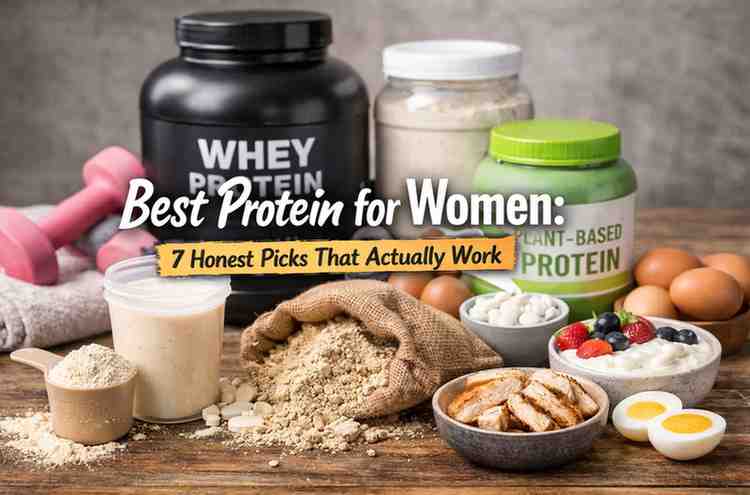
The 7 Types of Protein I’ve Seen Work (and When)
Let’s break this down practically.
1. Whey Protein Isolate – Best Overall for Results
From what I’ve seen, this is the most consistently effective option for:
-
Lean muscle tone
-
Faster recovery
-
Appetite control
-
Post-workout use
Why isolate specifically?
Less lactose. Easier digestion. Higher protein per scoop.
Who thrives on this:
-
Women strength training 3–5x per week
-
Women in fat loss phases
-
Women trying to increase muscle definition
Who struggles:
-
Those with dairy sensitivity
-
Those prone to bloating
Most people I’ve worked with mess this up by:
-
Buying whey concentrate (cheaper, harder to digest)
-
Using 1 scoop but expecting dramatic change without adjusting total daily protein
2. Plant-Based Protein – Best for Sensitive Digestion
This has improved a lot in recent years.
Pea + rice blends tend to work best.
I didn’t expect plant protein to close the gap as much as it has. But for many women with bloating from dairy, this is a game changer.
Who benefits most:
-
Dairy-sensitive women
-
Women with gut issues
-
Vegan or vegetarian diets
Downside:
-
Slightly lower leucine (important for muscle growth)
-
Sometimes chalky texture
What works:
-
Blends, not single-source pea alone
-
25–30g per serving
3. Collagen Protein – Not for Muscle, But…
Almost everyone I’ve seen struggle with this does one thing wrong:
They expect collagen to build muscle like whey.
It won’t.
Collagen shines for:
-
Hair
-
Skin
-
Nails
-
Joint support
It’s not a complete protein.
Use it as an add-on. Not your main source.
4. Casein Protein – Best for Night Hunger
This one is underrated.
Slow digestion.
Great before bed.
Reduces late-night snacking.
Who it works well for:
-
Women cutting calories
-
Women who wake up hungry
-
Women trying to preserve muscle during fat loss
But yes — dairy again. Not for everyone.
5. Egg White Protein – Quietly Solid
Hardly marketed. Rarely hyped.
But from what I’ve seen, it works surprisingly well for women who:
-
Can’t tolerate whey
-
Don’t love plant protein texture
-
Want a complete amino profile
It’s neutral. Not flashy. Effective.
6. Protein from Whole Foods – Still Underrated
Honestly? The best protein for women might not be powder → at all.
Real patterns I’ve seen:
-
Greek yogurt daily → better appetite control
-
Eggs at breakfast → → fewer cravings
-
Chicken or salmon lunch → improved energy
Powder helps.
But foundation first:
-
20–40g protein per meal
-
Spread across 3–4 meals
That alone changes body composition over months.
7. High-Protein Ready Shakes – For Busy Lives
Are they perfect? No.
But for:
-
Nurses
-
Corporate professionals
-
Moms
-
Women commuting
They prevent skipped meals.
And skipped meals lead to night binges more often than people admit.
How Long Does Protein Take to “Work”?
This is where expectations break.
What I’ve seen consistently:
Week 1–2
-
Less hunger
-
More stable energy
Week 3–4
-
Better gym performance
-
Slight firmness in muscles
Week 6–8
-
Visible tone changes
-
Reduced cravings
-
Better recovery
But only if total intake is consistent.
Most women quit at week two.
That’s the pattern.
Common Mistakes That Slow Results
Almost universal.
-
Using protein but not strength training
-
Not tracking total daily intake
-
Drinking it but still under-eating protein overall
-
Expecting fat loss without calorie awareness
-
Choosing low-quality brands full of fillers
-
Swapping meals for shakes instead of adding protein strategically
Protein amplifies effort.
It doesn’t replace it.
Who This Is NOT For
Let’s be honest.
Protein powder won’t fix:
-
Severe hormonal imbalance
-
Chronic sleep deprivation
-
Extreme calorie restriction
-
Emotional eating patterns
It helps.
But it’s not therapy.
It’s not sleep.
It’s not stress management.
I’ve seen women blame protein for “not working” when the real issue was 4 hours of sleep and high cortisol.
Quick FAQ (Real Questions I Get All the Time)
Is protein powder safe for women?
Yes — when from reputable brands. It’s concentrated food, not steroids.
Will protein make me bulky?
No. Muscle requires heavy training + calorie surplus. Protein alone won’t bulk you.
Can I use protein without working out?
Yes. Especially for appetite control. But body composition changes will be slower.
Is it worth it for weight loss?
From what I’ve seen? Yes — if it helps you hit protein targets consistently.
Objections I Hear (And What Actually Happens)
“It’s too expensive.”
Compare it to daily takeout snacks. Protein often reduces those.
“I don’t want chemicals.”
Choose simple ingredient lists. Many are clean now.
“I tried before and it didn’t work.”
Most people I’ve worked with weren’t hitting total protein targets.
“I don’t want to rely on supplements.”
You don’t have to. But convenience improves consistency.
Reality Check: When Results Feel Slow
This part matters.
Protein improves:
-
Muscle retention
-
Appetite control
-
Recovery
It does not:
-
Melt fat overnight
-
Eliminate stress
-
Replace resistance training
Almost everyone I’ve seen succeed treated protein as a support tool, not a miracle.
The emotional shift?
They stopped feeling constantly hungry.
That alone changed everything.
Practical Takeaways
If you’re overwhelmed, here’s what I’d tell a close friend:
-
Aim for 25–35g protein per meal.
-
Strength train 3x per week.
-
Use whey isolate or plant blend if needed.
-
Track total daily protein for two weeks.
-
Expect subtle shifts before dramatic ones.
-
Give it 6–8 weeks.
-
Adjust based on digestion and energy.
And emotionally?
Expect:
-
Doubt in week two.
-
Scale fluctuations.
-
Random bloating if sodium shifts.
-
Moments where you question if it’s worth it.
That’s normal.
Consistency beats intensity here.
Still — protein isn’t magic.
But I’ve watched enough women finally stop feeling stuck once they consistently hit their protein targets. I’ve seen cravings calm down. I’ve seen confidence build when strength goes up. I’ve seen that quiet shift from “my body is fighting me” to “oh… this feels stable.”
The best protein for women isn’t about pink packaging or influencer hype.
It’s about digestion, consistency, total intake, and realistic expectations.
And sometimes that small win — fewer 4 PM crashes — is the beginning of something much bigger.