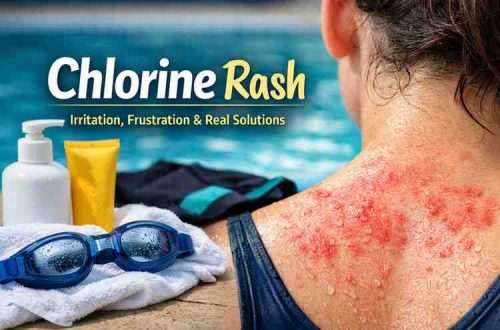
I didn’t expect chlorine rash to be something so many people quietly struggle with.
But after watching swimmers, parents of kids in swim teams, and even casual gym-goers deal with it over the years… it keeps coming up.
Same story. Different people.
Someone starts swimming regularly. Maybe it’s for fitness. Maybe their kid just joined a swim club. Maybe they discovered lap swimming helps their stress.
First week — great.
Second week — still fine.
Then suddenly…
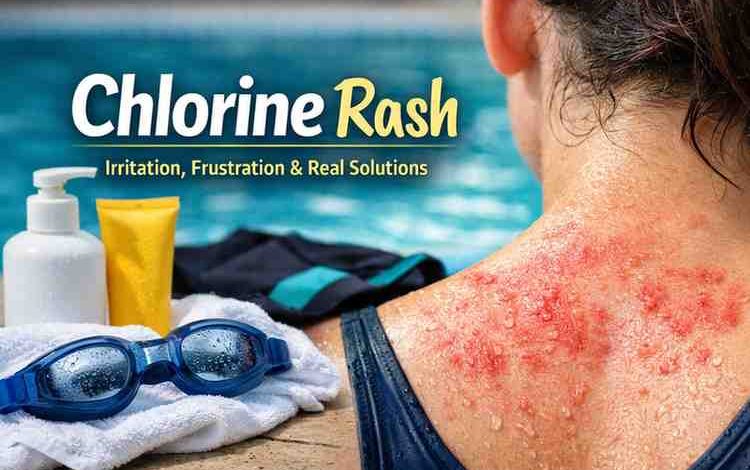
Red patches.
Burning skin.
Tiny itchy bumps around the neck, arms, or behind the knees.
At first they assume it’s dry skin.
Then they change soaps.
Then they start wondering if they’re allergic to the pool.
Honestly, the frustration kicks in fast.
Because swimming is supposed to be the healthy thing. And suddenly their skin looks like it’s rebelling against it.
And this is where chlorine rash enters the conversation.
From what I’ve seen across dozens of people dealing with it, the issue usually isn’t what they think it is. And the fixes people try first… almost always miss the real problem.
Let’s unpack what’s actually going on.
What Chlorine Rash Actually Is (And What It Usually Isn’t)
Most people assume a chlorine rash means they’re allergic to chlorine.
In reality… that’s pretty rare.
What I’ve repeatedly seen instead is irritant contact dermatitis.
Which basically means the chlorine isn’t triggering an allergy.
It’s just stripping the skin barrier too aggressively.
Once that protective layer gets compromised, skin reacts.
And the reaction shows up as:
-
Red itchy patches
-
Dry flaky areas
-
Small bumps
-
Burning or stinging after showers
-
Skin that suddenly feels tight
Some people also describe it as: “My skin feels like it’s slightly sunburned.”
That description comes up a lot.
And interestingly, the rash doesn’t always appear immediately after swimming.
Sometimes it shows up:
-
Later that evening
-
The next morning
-
After a few days of repeated exposure
That delay confuses people. They start blaming random things instead of the pool.
The Pattern I See Over and Over
Once you start watching how people develop chlorine rash, a pretty consistent pattern appears.
It usually happens when three things stack together.
1. Frequent Swimming
Most first-time swimmers are fine.
The rash tends to appear once someone starts swimming 3–5 days per week.
Their skin simply doesn’t get enough recovery time.
2. Long Pool Exposure
Kids in swim teams are classic examples.
Two-hour practices.
Four or five days per week.
Their skin is sitting in chlorinated water longer than most people realize.
3. Weak Skin Barrier
This is the piece almost nobody considers.
People who get chlorine rash more often tend to have:
-
naturally dry skin
-
eczema history
-
sensitive skin
-
harsh soaps in their routine
So chlorine becomes the final straw.
The skin barrier breaks down… and then the rash appears.
Where The Rash Usually Shows Up
Another interesting pattern.
Chlorine rash tends to show up in the same locations across different people.
Areas where the skin is thinner or more sensitive.
Common spots include:
-
Neck
-
Upper chest
-
Behind the knees
-
Inner elbows
-
Armpits
-
Around swimsuit edges
Swimsuit friction sometimes makes it worse.
I’ve also seen people get it around goggles or swim caps, especially if the gear traps chlorinated water against the skin.
The Mistake Most People Make First
Almost everyone I’ve seen deal with chlorine rash makes the same first move.
They start scrubbing harder in the shower.
Which honestly makes things worse.
Their thinking goes like this:
“Maybe I just need to wash the chlorine off better.”
So they:
-
use strong soap
-
scrub aggressively
-
take very hot showers
But the skin barrier is already damaged.
Scrubbing just strips it even further.
And the rash intensifies.
I didn’t expect this to be such a common issue until I watched it happen repeatedly.
What Actually Helps Most People
Once someone understands that chlorine rash is mostly a skin barrier problem, the strategy changes completely.
Instead of trying to remove chlorine more aggressively…
The goal becomes protecting and repairing the skin.
These are the approaches I’ve seen work most consistently.
1. Rinse Immediately After Swimming
This sounds simple, but timing matters.
The sooner chlorine leaves the skin, the less irritation it causes.
From what I’ve seen:
Within 5–10 minutes is ideal.
Many people sit around the pool chatting or driving home before showering.
That extended chlorine exposure can make a difference.
2. Switch To Gentle Cleansers
Harsh soaps are one of the biggest hidden triggers.
I’ve watched people fix their chlorine rash simply by changing their body wash.
Look for cleansers labeled:
-
fragrance free
-
gentle
-
eczema friendly
And avoid:
-
antibacterial soaps
-
strong deodorant soaps
-
heavily scented body washes
Those tend to wreck already irritated skin.
3. Moisturize Immediately After Showering
This is the step most people skip.
And honestly… it’s the step that often makes the biggest difference.
The skin barrier needs help rebuilding.
Good moisturizers lock water back into the skin.
Consistency matters more than brand.
Apply moisturizer:
-
right after showering
-
within 3 minutes
-
while skin is slightly damp
That little timing trick works surprisingly well.
4. Use A Barrier Cream Before Swimming
This one surprised me after watching swimmers experiment with it.
Applying moisturizer before entering the pool can reduce irritation.
Think of it as a thin protective layer.
Many regular swimmers swear by this habit.
It doesn’t eliminate chlorine exposure…
But it can reduce how aggressively it affects the skin.
5. Shorten Pool Time (At Least Temporarily)
If the rash is already active, continuing long swims can keep the irritation going.
Sometimes people need a short break.
Or they reduce swimming sessions from:
5 days → 3 days per week
Once the skin recovers, they gradually return to normal routines.
How Long Chlorine Rash Usually Takes To Heal
This question comes up constantly.
From what I’ve seen across multiple cases:
Typical recovery timeline:
-
Mild irritation: 2–4 days
-
Moderate rash: 1–2 weeks
-
Severe cases: up to 3 weeks
The biggest factor affecting recovery is continued exposure.
If someone keeps swimming daily without adjusting their routine…
The rash often lingers.
But once the skin barrier starts recovering, improvement usually happens fairly quickly.
When Chlorine Rash Might Not Be Chlorine
Here’s something that catches people off guard.
Sometimes the rash isn’t chlorine at all.
Other possibilities I’ve seen mistaken for chlorine rash include:
-
heat rash from hot pool decks
-
swimsuit detergent irritation
-
fungal infections
-
eczema flare-ups
If a rash:
-
spreads rapidly
-
becomes very painful
-
forms blisters
-
doesn’t improve after two weeks
That’s usually the point where seeing a doctor becomes the smart move.
Quick Answers To Common Questions
Is chlorine rash contagious?
No. It’s a skin irritation reaction, not an infection.
Can you suddenly develop chlorine rash?
Yes. I’ve seen people swim for years before their skin suddenly becomes sensitive.
Does saltwater pool swimming prevent it?
Sometimes. Saltwater pools still contain chlorine, but often at lower levels.
Some people tolerate them better.
Should you stop swimming completely?
Usually no.
Most people can continue swimming once they adjust their skincare routine.
Objections I Hear All The Time
After explaining all this, people usually push back with a few concerns.
And honestly… they’re fair questions.
“But I shower every time I swim.”
True.
But timing and soap choice matter.
Many people shower too late or too aggressively.
Gentle cleansing works better than aggressive scrubbing.
“My friend swims daily and never gets this.”
Skin tolerance varies wildly.
Some people have incredibly resilient skin barriers.
Others… not so much.
And genetics plays a big role.
“Does this mean I’m allergic to pools now?”
Almost never.
What I’ve seen far more often is temporary irritation, not permanent intolerance.
Once people adjust their routine, they usually return to swimming comfortably.
Reality Check: What People Don’t Expect
There are a few things about chlorine rash that surprise people.
It’s often cumulative
The rash may appear after weeks of swimming, not immediately.
Overwashing can make it worse
Counterintuitive, but very real.
Skin recovery takes patience
Even after the rash fades, the skin barrier may remain sensitive for a while.
That’s why prevention habits matter.
Practical Takeaways From What I’ve Seen
If someone asked me for the simplest plan to deal with chlorine rash, this is what I’d tell them.
Start here:
-
Shower within 10 minutes of leaving the pool
-
Use gentle fragrance-free cleanser
-
Moisturize immediately after showering
-
Consider moisturizer before swimming
-
Reduce pool time temporarily if rash appears
Avoid these mistakes:
-
aggressive scrubbing
-
harsh soaps
-
skipping moisturizer
-
ignoring early irritation
And emotionally… this is the part people don’t expect.
Skin issues are frustrating.
Especially when they interfere with something healthy like swimming.
I’ve seen kids get embarrassed about it during swim season. Adults worry they’ll have to give up lap swimming.
But the good news is most cases aren’t permanent problems.
They’re skin barrier issues that just need a few habit adjustments.
I’ve watched enough swimmers go through this cycle now that the pattern feels familiar.
First confusion.
Then frustration.
Then a bit of trial and error.
Eventually they land on a routine that works.
So no — chlorine rash isn’t something to ignore.
But it’s also rarely the dealbreaker people fear it might be.
Once people understand what their skin is actually reacting to… the whole situation tends to calm down a lot.
Author
Related Posts
- Ways to Overcome Dyspnea While Lying Down: 11 Relief Strategies That Actually Help When You’re Desperate
- Role of Hydration: 9 Hard Lessons That Finally Gave Me Relief (After Years of Getting It Wrong)
- Cardiac arrest disease: 7 hard truths that bring relief when you’re overwhelmed
- Nutrients From Animal Foods: 9 Honest Things I Learned the Hard Way
- Power of a positive mindset: 9 hard lessons from frustration to real relief
- 2 Month Hair Growth: 7 Hard Truths I Learned (and One That Finally Worked)
- Taking Creatine on Rest Days: 7 Hard Truths I Learned the Confusing Way (And Why It’s Actually Worth It)
- How to reduce the chances of Bone cancer: 11 grounded habits that actually bring relief