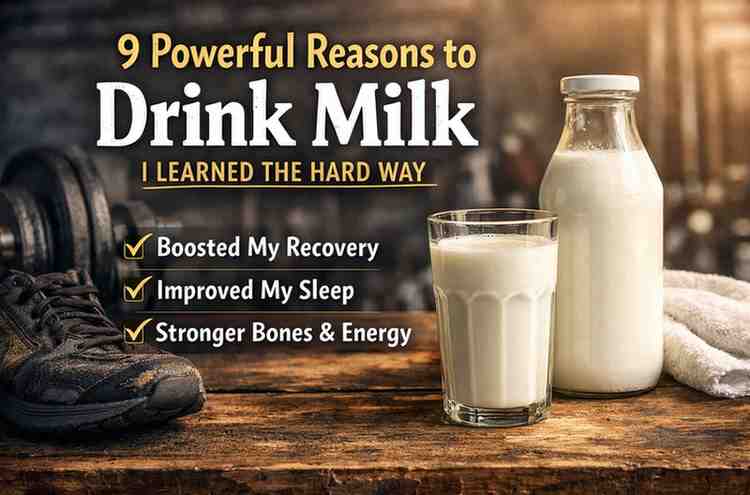
Honestly, I Thought Milk Was Overrated
Not gonna lie.
For most of my adult life, I thought milk was… kind of pointless.
I grew up drinking it because everyone did. Cereal? Milk. Cookies? Milk. Dinner table? Milk was just there. Then somewhere in my late 20s, I ditched it. Almond milk, oat milk, black coffee, protein powders. Milk felt old-school. Basic. Something fitness blogs quietly judged you for.
Fast forward a few years, and I found myself tired all the time. Weird joint aches. Slower recovery after workouts. Cravings that made zero sense. I kept “eating clean” and doing all the right things, but something felt off.
That’s when I circled back to something I’d ignored for years: reasons to drink milk.
Not because a headline told me to.
Because my body kind of forced the issue.
What follows isn’t nutrition theory or textbook advice. It’s what I’ve seen, tested, messed up, and slowly figured out from actually drinking milk again—daily, inconsistently, badly at first, then better.
This isn’t magic.
It’s just… real.
Why I Even Gave Milk Another Shot
The short version? I was tired of feeling run down.
The longer version is messier.
I was lifting weights 4–5 times a week. Eating “high protein.” Sleeping okay-ish. But recovery sucked. My knees felt older than they should. And no matter how much I ate, I felt weirdly under-fueled.
I tried supplements first.
Bad idea.
Protein powders → made my stomach angry. Calcium pills did nothing noticeable. Magnesium helped a bit, but not enough.
One night, half-joking, I poured a glass of milk after dinner. Whole milk. The kind I hadn’t touched in years.
And yeah… I slept better that night.
Coincidence? Maybe.
But it got my attention.
Milk Fixed a Recovery Problem I Didn’t Know I Had
This was the first thing I noticed, and it surprised me.
I didn’t feel like a superhero or anything. But my muscles stopped feeling beat up all the time. The soreness shortened. Workouts felt more “contained” instead of lingering for days.
Here’s what I think was happening (from experience, not lab coats):
-
I wasn’t actually hitting enough usable protein
-
I was missing minerals that food alone wasn’t covering
-
My post-workout nutrition was too complicated
Milk simplified things.
I started having a glass after workouts instead of a shaker bottle full of chalky sadness. Less bloating. More consistency.
Lesson learned: recovery isn’t about extremes. It’s about what you can actually stick to.
I Underestimated How Filling Milk Is
This part caught me off guard.
I always thought milk would make me more hungry. Sugar, carbs, all that. But the opposite happened.
When I added milk to my routine, I stopped snacking mindlessly. Especially at night.
A glass of milk around 9–10 PM did something interesting:
-
Curbed late-night cravings
-
Reduced my urge to “just grab something”
-
Made desserts feel optional instead of necessary
I messed this up at first by drinking flavored stuff. Chocolate milk every night? Yeah, no. That backfired fast.
Plain milk worked. Simple. Boring. Effective.
My Sleep Improved (And I Wasn’t Expecting That)
This one’s subtle, but real.
I didn’t suddenly sleep like a baby. But my sleep felt deeper. Less tossing. Fewer middle-of-the-night wake-ups.
From what I’ve seen, at least, milk before bed acts like a soft landing. Not a knockout punch. Just a signal that it’s time to shut things down.
I skipped it one week to “test” things. Sleep got lighter again.
Went back.
Sleep stabilized.
Not perfect. Just better.
Milk Helped My Bones in a Way I Didn’t Feel—Until I Did
This is hard to explain without sounding dramatic.
I didn’t feel my bones getting stronger. Obviously. But after a few months, something changed.
My knees stopped complaining during squats. My lower back felt more stable during long days sitting. Even random aches faded.
I used to brush off bone health as a “future me” problem. Big mistake.
What I learned the slow way:
-
Bone health is about prevention, not repair
-
Waiting until something hurts is too late
-
Consistency matters more than intensity
Milk wasn’t the only factor, but it was a big one.
It Simplified My Nutrition (Which Was Overcomplicated)
I had turned eating into a full-time job.
Macros. Timing. Powders. Apps. Weighing things. Stressing over numbers.
Milk cut through a lot of that.
Instead of asking, “Did I get enough protein today?”
I could answer with, “Yeah, probably.”
That mental relief matters more than people admit.
Sometimes the best nutrition choice is the one that reduces friction.
I Stopped Chasing Supplements
This deserves its own section.
I used to stack supplements like Pokémon cards. Calcium here. Protein there. Vitamin D. B12. Magnesium. Something for joints. Something for sleep.
Most of it? Barely noticeable.
Milk quietly replaced half of that without me trying.
Not all supplements are bad. But relying on real food felt… grounding. Less fragile. Less “what if I miss a dose?”
I still take a couple things. But far less than before.
Milk Gave Me Energy Without the Crash
This one took time to notice.
Milk doesn’t spike energy like caffeine. It’s more like a steady background hum.
On days I drank milk regularly, I felt:
-
Less afternoon fog
-
Fewer energy dips
-
Less need for a second coffee
I didn’t connect the dots at first. I thought it was sleep. Or stress. Or placebo.
But when milk disappeared, the dips came back.
It Worked Across Busy, Normal Life (Not Just “Perfect” Days)
Here’s something health articles rarely admit:
Most advice fails on busy days.
Milk didn’t.
I could drink it:
-
When rushed
-
When traveling
-
When I didn’t feel like cooking
-
When I was stressed or distracted
No prep. No cleanup. No decision fatigue.
That’s huge.
If something only works when life is calm, it’s not realistic.
It Changed How I Think About “Simple” Foods
This might be the biggest shift.
I used to assume simple = inferior.
Milk taught me that simple often means tested by time.
There’s a reason entire cultures built diets → around it. A reason athletes still use it. A reason doctors don’t roll their eyes when you mention it.
Trends come and go.
Milk just… stays.
Mistakes I Made (So You Don’t Have To)
I didn’t get this right immediately.
Here’s what didn’t work:
-
Drinking too much too fast (hello stomach issues)
-
Choosing ultra-sugary versions
-
Using milk as a meal replacement instead of support
-
Ignoring how my body reacted at first
What worked better:
-
Starting with small amounts
-
Pairing it with meals or workouts
-
Paying attention instead of forcing it
If milk doesn’t agree with you immediately, that doesn’t mean it never will. But also—listen to your body. Always.
A Quick Reality Check (Because This Matters)
This isn’t a miracle drink.
I’m not saying milk will fix everything. Or that everyone should drink it. Or that alternatives are bad.
Some people genuinely don’t tolerate it well. Some have ethical or dietary reasons to skip it. That’s valid.
All I’m saying is this:
When I actually tested the reasons to drink milk in my own life—slowly, imperfectly—it earned its place back.
Practical Takeaways (If You’re Considering It)
If you’re curious but unsure, here’s what I’d suggest:
-
Try it consistently for 2–3 weeks
-
Keep everything else the same
-
Notice sleep, recovery, hunger, energy
-
Don’t overdo it
-
Don’t expect fireworks
Subtle improvements are still improvements.
FAQ: What I’ve Learned Messing With This Myself
Is milk good for adults, or is it just for kids?
From my experience, adults benefit just as much—maybe more. Recovery, bones, sleep. It adds up.
How much milk should you drink daily?
I found 1–2 glasses was enough. More wasn’t better for me.
What if milk upsets your stomach?
Start small. Try different types. Or don’t force it. Your body’s feedback matters.
Is milk better than plant alternatives?
Not better or worse—just different. Milk worked better for me nutritionally.
When’s the best time to drink milk?
Post-workout or before bed felt best. Midday was fine too.
Would I stop drinking milk again?
Honestly? Probably not. It’s earned its spot.
So yeah. Milk isn’t trendy. It won’t get you likes. It won’t come in a sleek pouch with a podcast ad.
But for me?
Revisiting the real reasons to drink milk quietly changed how I feel day to day. Not overnight. Not dramatically. Just enough to matter.
And sometimes, that’s the best kind of change.